
Pick the wrong patio material and you’ll live with it for a long time. Pick the right one and the patio becomes where the day starts and ends: coffee in the morning, burgers on Saturday, sitting around the fire pit once the sun’s down. Before anyone talks layout, you have to settle the material question. If you’re stuck on pavers vs. concrete in Tucson, or wondering if natural stone is worth the extra money, here’s how we’d think it through for your house, your budget and this climate.
Around Southern Arizona, it mostly comes down to three choices: concrete pavers, poured or stamped concrete, and natural stone like flagstone or travertine. They look different, cost different, wear differently and feel very different under bare feet in August.
Pavers vs. Concrete vs. Natural Stone: Quick Comparison
- Poured concrete: cheapest up front and clean looking, but it cracks, and you can’t patch it without the patch showing
- Stamped concrete gets you decorative patterns at a moderate price. It’s still one solid slab, though, and it can still crack.
- Concrete pavers: mid-range cost, very tough, easy to fix, and available in more colors, sizes and patterns than you’ll want to look at
- Natural stone: the priciest, with a look nothing else matches. Lighter stones like travertine stay relatively cool underfoot.
Patio Cost Comparison
National cost guides put basic poured concrete patios at roughly $6 to $12 per square foot, concrete pavers around $8 to $15 per square foot, and natural stone such as flagstone at about $15 to $30 or more per square foot. Stamped concrete usually lands somewhere between plain concrete and pavers, depending on how involved the pattern and color work get.
What you’ll actually pay depends on the size, how much digging and base prep the site needs, how complicated the design is (borders, steps), and how easy it is to get material into the backyard. Curves, multiple levels and custom inlays all add labor. Get itemized quotes. It’s the only way to compare one material against another fairly.
Poured and Stamped Concrete Patios
The pros
If you need to cover a lot of ground on a tight budget, concrete is hard to beat. It goes in fast, gives you one smooth surface, and suits simple, modern designs. Stamped concrete adds texture and color to imitate brick, slate or stone for less than the real thing.
The cons
Here’s the catch. Concrete is one big slab, and slabs crack. Ground movement, temperature swings and heavy loads all work on it over the years. Control joints help steer where it cracks, but they won’t stop it. When cracks or stains do show up, repairs usually stand out, and bigger damage can mean sawing out a section and pouring it again. Stamped concrete may also want resealing every few years to hold its color and protect the surface.
Best for
Keeping the upfront cost as low as possible. A simple look, a big usable surface, places like a side yard or a utility pad where nobody’s going to judge it.
Concrete Paver Patios
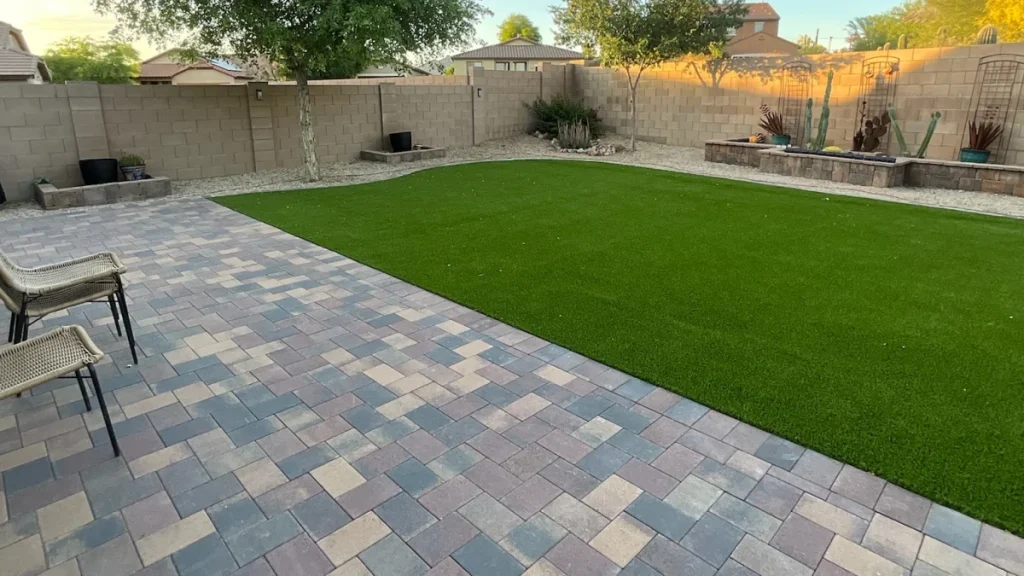
Concrete pavers are individual pieces set on a compacted gravel base, with sand filling the joints between them. That one difference, lots of small pieces instead of one slab, is why they do so well in Tucson.
The pros
- They flex. Pavers can shift a little with the ground without cracking the whole patio.
- Strength: good pavers are dense and made for heavy loads, driveways included.
- Repairs are easy. Stained or chipped paver? Pull it and drop in a new one. A section can be reset if it needs it.
- Design options run to dozens of colors, textures, sizes and laying patterns, plus borders, curves and accents.
- Drainage: water can move through the joints during a monsoon, and permeable paver systems soak up even more runoff.
The cons
They cost more than plain concrete up front, and installs take longer because every piece gets set by hand. The joints need a sand top-off and some weed control now and then. Sealing every few years keeps the color rich and the joints stable.
Best for
Anyone who wants a patio that’s tough, good looking, easy to fix and can be dressed up with patterns and borders. They’re our go-to for pool decks, walkways and driveways too. If a client can swing the difference over concrete, this is usually where we steer them.
Natural Stone Patios: Flagstone and Travertine
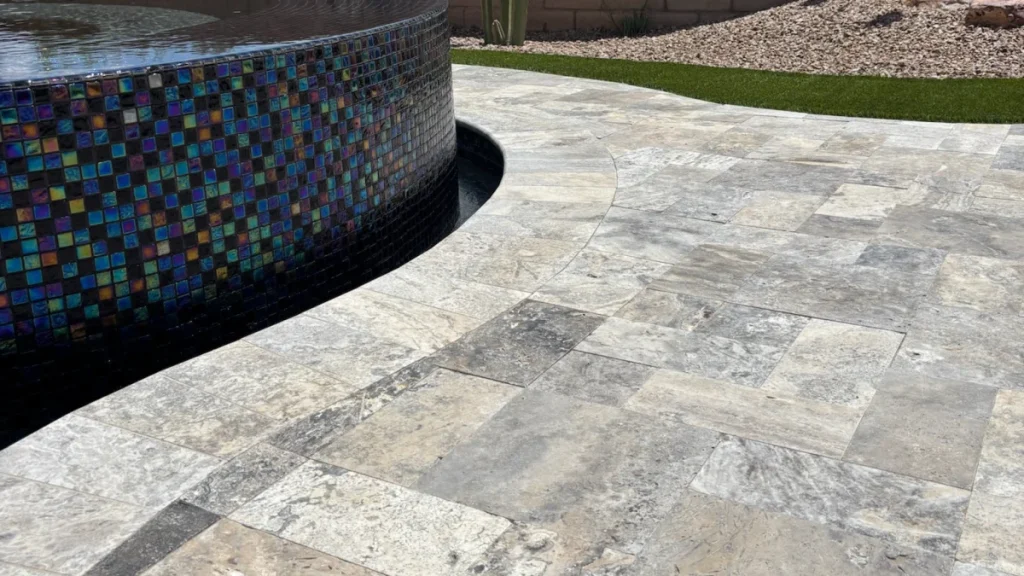
Natural stone has a look no manufactured product fully copies. Every piece has its own color shifts and texture. No two patios come out the same.
Flagstone
Flagstone just belongs in a desert yard. The warm earth tones sit right next to gravel, cactus and native plants like they grew there. Lay it in irregular shapes for a rustic feel, or have it cut into more even pieces for something cleaner.
Travertine
Around Tucson pools, travertine is the favorite, and for good reason. The light color bounces sunlight back, and the porous surface tends to stay cooler underfoot than darker materials. Bare feet appreciate that. Tumbled travertine also has decent texture for wet areas.
The cons
It’s the most expensive of the three, and setting uneven pieces well takes a skilled crew. Some stones are pretty porous and do better sealed against stains, especially near a grill or outdoor kitchen.
Best for
Pool decks, front entries and the outdoor spaces everyone sees, where looks and comfort matter most.
Which Patio Material Handles Tucson’s Climate Best?
Heat
Light colors stay cooler in direct sun. Simple as that. Light pavers and travertine are usually easier on bare feet than dark concrete or dark pavers. Whatever you pick, putting a pergola or other shade over part of it makes a huge difference in summer.
Monsoon rain
Drainage starts with grading and base prep, whatever goes on top. The patio should pitch slightly away from the house. Pavers and stone set with joints move water well when they’re installed right, and permeable systems cut runoff even more. If water sits against your foundation after the first big storm, something got missed.
Sun exposure and fading
Our UV is no joke, and it can fade some colors over the years. Good pavers with color all the way through, plus sealing every so often, keep a patio from looking washed out.
Long-term durability
Any of the three can last decades on a proper base. Pavers and stone win on repairs, since you can swap individual pieces without tearing out the whole patio.
Base Preparation: The Part You Don’t See
We’ll say it plainly: the base decides how long your patio lasts, not the surface. For pavers and natural stone, that means digging to the right depth, laying and compacting crushed gravel in layers, and finishing with a level bedding layer. For concrete, it’s a compacted subgrade, the right thickness and control joints in the right places.
Tucson soil can be hard caliche, expansive clay, or both, and each one affects how a patio behaves over time. A contractor who takes the base seriously plans around your site, grades for drainage and uses edge restraints so pavers stay locked in.
When a patio settles, shifts or cracks, a shortcut here is the usual reason.
Patio Design Ideas for Tucson Homes
- Shaded entertaining zone: pavers under a pergola, string lights overhead, a dining table in the middle.
- Fire pit lounge. A round paver or flagstone circle with a gas fire pit and built-in seat walls.
- Pool deck refresh: cool travertine around the water, with strips of artificial turf for a modern touch.
- Outdoor kitchen hub: a paver pad with a built-in grill, counter space and somewhere to pull up a stool.
- Desert-friendly walkways of flagstone or pavers winding through gravel and native plants.
Maintenance Compared
- Concrete: sweep and wash it, keep an eye on cracks, and reseal stamped concrete every few years
- Pavers: sweeping, a joint sand top-off now and then, weed control, and resealing every few years
- Natural stone: sweeping, gentle cleaning, and sealing for porous stones like travertine
So, Which Should You Choose?
- Go with concrete if budget comes first and you just need a simple, working surface.
- Go with pavers if you want something tough, easy to fix and full of design options at a mid-range price.
- Go with natural stone if the look is what matters most, especially on a pool deck or front entry.
You don’t have to pick just one, either. Plenty of Tucson yards mix them: a paver patio with a natural stone border, or a travertine pool deck running up to artificial turf. Add a fire pit or an outdoor kitchen and the patio turns into the room everybody ends up in. Replacing a lawn at the same time? Check our guide to artificial turf cost in Tucson.
How Long Does Each Patio Last?
Installed right and given basic care, all three will be around for many years. Concrete may need crack repair or resurfacing as it ages. Pavers can usually be lifted, re-leveled and reset if a spot settles, which buys the patio a lot more life. Natural stone is extremely durable, and the weathered look tends to get better with age. In every case, though, the base and drainage have more to do with how long it lasts than the surface material does.
Questions to Ask Your Patio Contractor
- What base material are you using, how deep, and how are you compacting it?
- Which way does the patio slope, and where does the water go in a monsoon?
- What brand and type of pavers or stone are going in?
- Are borders, steps, sealing and debris removal in the quote, or extra?
- How long from first day to last?
Get Expert Help Choosing Your Patio
Still going back and forth on pavers vs. concrete or natural stone? Sometimes it’s easier to decide standing in the actual yard. Oakswood Turf & Hardscape installs pavers, natural stone and full outdoor living spaces across Tucson, Marana, Vail, Sahuarita, Catalina Foothills and Tanque Verde. Request a free estimate or call +1 (520) 622-9960, and we’ll walk through the options for your space and budget.