
“I heard the city will pay me to rip out my lawn.” We hear some version of that every few weeks, usually from a homeowner who’s already pricing turf. It’s half right. Tucson Water does run a turf removal rebate, and it can be worth thousands. But the Tucson grass removal rebate comes with real rules about who can apply and what has to go in where the grass used to be, and most people are surprised when they read the fine print.
Here’s how it works, who qualifies right now, why artificial turf is left out, and what you can do with a thirsty lawn if the rebate isn’t for you. One caveat before we start: these programs change, so check the current details with Tucson Water before you dig anything up.
What Is the Tucson Water Turf Removal Rebate?
It’s a water conservation incentive from Tucson Water, the City of Tucson’s water utility. The idea is to cut outdoor water use by replacing ornamental grass (grass that’s mostly there to look at, not to play sports on) with low-water planting.
According to the City, the program pays $2.50 per square foot of qualifying turf removed, up to $30,000 per project. The final number gets confirmed after a site visit, and it can’t be more than what you spent on the project before tax. There are a couple of add-ons, too:
- Trees: $100 per qualifying tree, at least 15-gallon size, from approved plant lists
- Rainwater harvesting: $0.50 per gallon of basin capacity, up to $5,000 per property
Fiscal Year 2027 money is first come, first served until it’s gone. Checks generally show up several weeks after the project is approved, so don’t count on that cash to pay your contractor on day one.
Why Tucson Wants to Remove Ornamental Grass
Tucson leans hard on Colorado River water brought in through the Central Arizona Project, plus groundwater. With the drought dragging on and shortage declarations on the river, every city in the Southwest is trying to make each gallon go further. Outdoor watering is one of the biggest water uses in any desert town. A patch of decorative grass drinks a lot of it and doesn’t give much back.
Swap that grass for shade trees and drought-tolerant plants and you get better long-term water security, less heat bouncing off buildings in summer, and somewhere for birds and pollinators to live. That’s the reason the program pays for living, planted yards and not for rock, concrete or synthetic lawns.
How Much Water Can You Save by Removing a Lawn?
It depends on how big the lawn is, what kind of grass it is, how it was watered and what you put in its place. Cool-season and overseeded lawns here tend to need frequent watering most of the year. A mature desert yard on drip needs a fraction of that, mostly while plants get established and during the worst of the heat.
On a commercial property or HOA with big turf areas, the difference shows up on the monthly bill fast. Homeowners see the same thing on a smaller scale. And you get your Saturday mornings back, since there’s no more mowing, edging or chasing down broken sprinkler heads.
Who Qualifies for the Tucson Grass Removal Rebate?
This is where most people get tripped up. As currently published, the Turf Removal Rebate is for Tucson Water commercial, industrial, institutional and multifamily customers. Think businesses, schools, churches, apartment complexes and homeowners associations. HOAs and co-ops can apply with a consensus letter signed by the board president.
The property needs active Tucson Water service, and whoever applies has to be the owner, an authorized party on the water account, or the designated contact. Eligibility is per property.
Single-family homeowners are not listed as eligible for this specific program.
That said, if you own a house in Tucson, keep an eye on the City’s water conservation pages. Programs get updated, and a residential incentive could show up down the road. Live in Marana, Vail, Sahuarita, Oro Valley or somewhere else with a different water provider? Call that provider. Each one runs its own programs.
Does Artificial Turf Qualify for the Rebate?
No. The City says flat out that replacement artificial grass won’t be rebated, and as a turf installer we’d rather you hear that from us now than find out after the check doesn’t come. The program exists to turn thirsty lawn into living, low-water planting that gives you shade, wildlife and a cooler yard. To qualify, a converted area generally has to:
- Remove living, growing turf that meets the City’s definition of ornamental grass
- Hit at least 50% plant or tree canopy coverage at maturity, using plants from the approved low-water lists
- Run on drip or bubbler irrigation with a pressure regulator and its own shut-off valve. No spray heads.
- Skip new hardscape in the converted area, other than ADA-accessible permeable paths
- Leave out fountains, pools, concrete and black plastic sheeting
Turf growing over big established tree roots may get reviewed case by case. Put simply, the rebate pays you to turn grass into a planted desert yard. It doesn’t pay for synthetic grass or pavement.
How the Application Process Works
If your property does qualify, expect the process to go roughly like this:
- Check eligibility and funding. Make sure your property type fits and there’s still money left this fiscal year.
- Apply before you touch anything. Projects usually need approval first. Leave the grass alone until you know where you stand.
- Pre-inspection. The City measures the turf and confirms it fits the program definition.
- Do the conversion. Out comes the grass; in go the plants, drip and any rainwater harvesting, all built to program standards.
- Post-inspection and payment. Once the final site visit checks the work, the amount is locked in and a check goes out.
Hang on to receipts and take before and after photos. It makes the final review go smoother and backs up your project costs.
What It Could Be Worth: A Quick Example
Say an HOA has a common area with 4,000 square feet of ornamental grass. At $2.50 per square foot, pulling it out could qualify for up to $10,000, as long as the project costs at least that much and the new planting checks every box. Qualifying trees and rainwater basins could push the total higher. For a big apartment complex or commercial site, that $30,000 cap goes a long way toward a serious yard overhaul.
Your Options If You Don’t Qualify
No rebate doesn’t mean no payoff. Pulling out a water-hungry lawn usually pays you back anyway, in lower water bills, less work and a yard that still looks decent in July. These are the directions we see Tucson homeowners go most often.
Artificial turf
If you’ve got kids or dogs and you want a green lawn they can actually use, this is the one. Artificial grass stays green all year with no watering or mowing, and it plays nicely with gravel and pavers. For budgeting, see our breakdown of artificial turf cost in Tucson.
Desert landscaping with gravel and rock
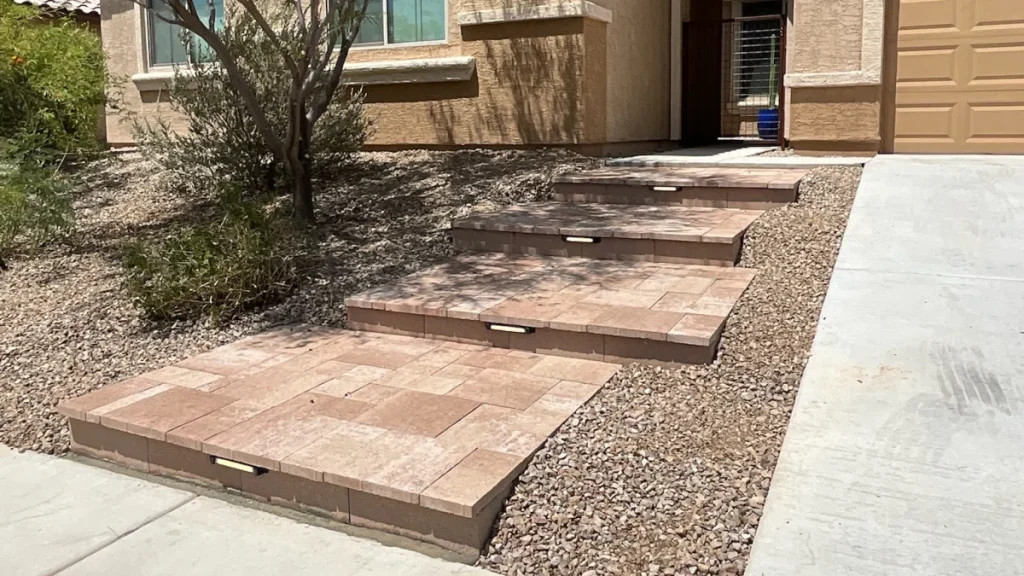
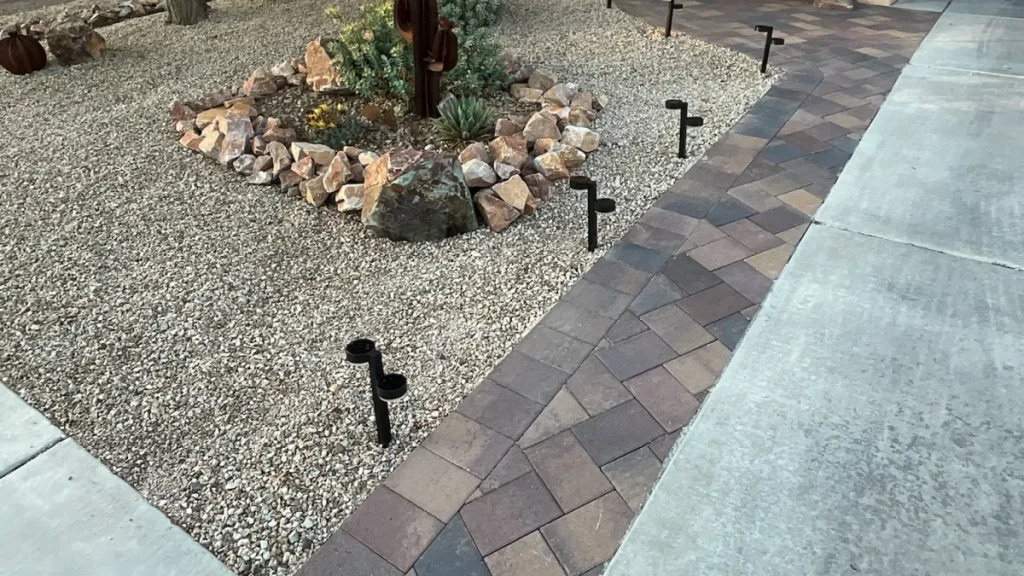
Decorative gravel and rock with native plants gives you a low-water yard that looks like it belongs in the Sonoran Desert. Once things are established, there’s very little to do.
Drip irrigation upgrades
Keeping trees, shrubs or garden beds? Switch them to a proper drip irrigation system. Water goes straight to the roots instead of misting the sidewalk and evaporating.
Patios and outdoor living space
Plenty of people trade part of the lawn for a paver patio, a fire pit or a pergola. Grass nobody walked on becomes the spot everybody hangs out. If you’re weighing materials, read our comparison of pavers, concrete and natural stone.
A mix of all of the above
This is what we’d do in most Tucson backyards. A small patch of turf for the kids or the dog, a patio for having people over, gravel and desert plants around the edges. You keep green grass where it earns its spot and use a lot less water overall.
Common Mistakes to Avoid
- Tearing out grass before approval. If you’re hoping for a rebate, starting early can knock the whole project out.
- Assuming you’re eligible. Check your property type and your water provider first.
- Planning turf and expecting a check. Artificial grass is excluded. Period.
- Forgetting the old irrigation. Cap or convert those sprinkler lines, or they’ll leak under whatever you put on top.
- Ignoring monsoon drainage. Grade the new yard so storm water heads away from the house. The first big storm will tell you if you got it wrong.
Tips for a Successful Lawn Conversion
- Get every bit of the Bermuda out. It spreads by underground runners, and if you only get most of it, it comes back.
- Plan shade first. Trees on the south and west sides of the yard or building do the most cooling over time.
- Group plants by how much water they need. Drip works better when the thirsty ones aren’t mixed in with the tough ones.
- Catch the rain. Shallow basins and swales grab monsoon runoff and give your trees a free deep soak.
- Plant for mature size. That cute little shrub won’t stay little, and you don’t want to be pruning it forever.
Planning a Grass Removal Project in Tucson?
If you manage an HOA or commercial property that might qualify for the Tucson grass removal rebate, we can help you plan a conversion that meets the program rules. If you’re a homeowner who’s just done with the lawn, we can help with that too. Oakswood Turf & Hardscape works across Tucson, Marana, Vail, Sahuarita, Catalina Foothills and Tanque Verde. Request a free estimate or call +1 (520) 622-9960.
Rebate details are based on information published by the City of Tucson as of 2026 and may change. Always confirm current eligibility and requirements with Tucson Water before starting a project.