
Most people call us in late June. The lawn is crunchy, the water bill is ugly, and somebody in the house has finally said, “Let’s just put in fake grass.” Then comes the question we hear more than any other: how much does artificial turf cost in Tucson? It depends on your yard, but not in a mysterious way. A handful of things drive the price, and once you know what they are you can set a real budget, read quotes without guessing, and spot the shortcuts that make cheap turf look tired after one summer.
Average Artificial Turf Cost in Tucson (2026)
For a professionally installed residential lawn around Tucson, plan on roughly $8 to $15 per square foot. That number should cover the turf, tearing out the old lawn, building and compacting the base, laying the turf, seaming, edging and infill. If a quote leaves some of that out, it isn’t really the same price.
Small or fussy yards usually land toward the top of the range. Setup, haul-off and detail work don’t shrink much just because the lawn does, so those costs get spread over fewer feet. A big open rectangle is the opposite. Here’s roughly how it shakes out by size:
- 200 to 300 sq. ft. (dog run, side yard or small courtyard): about $2,000 to $4,500
- 500 sq. ft. (small backyard lawn): about $4,000 to $7,500
- 800 sq. ft. (a typical backyard play area): about $6,500 to $12,000
- 1,000 sq. ft. (average full backyard): about $8,000 to $15,000
- 2,000 sq. ft. or more (big yard, or front and back together): often cheaper per foot, depending on access and prep
Treat those as planning numbers, not quotes. Two yards with the same square footage can come in far apart because of what’s under the dirt, how hard it is to get a wheelbarrow back there, and which turf you pick. We can’t give you a real number until we’ve stood in the yard with a tape measure.
What Affects the Cost of Artificial Turf in Tucson?
1. Turf quality and product type
Synthetic grass runs from thin, decorative stuff to dense turf built to take a beating. The better products have more blades per square inch, a tougher backing, stronger UV protection and color blends that actually look like grass. Out here, UV is the big one. Cheap turf sitting in full Tucson sun can fade or go brittle a lot sooner than you’d like. Specialty products (pet turf, heat-reducing turf, putting green surfaces) cost more per square foot too.
2. Removing the existing lawn or rock
Almost every job starts with tearing something out. Bermuda, old sod, decorative rock, weeds: all of it takes labor and dump fees. Bermuda deserves its reputation here. Leave a few runners behind and it will find its way up through the seams, so a careful crew digs it out properly and puts down weed barrier before anything else goes in.
3. Base preparation and grading
If you remember one thing from this page, make it this: the base is the job. It’s also the first thing a cheap installer skimps on, because you can’t see it once the turf is down.
A proper base means digging to the right depth, grading so water runs away from the house, then laying and compacting crushed rock or decomposed granite. Slopes, low spots, tree roots and that rock-hard caliche a lot of Tucson yards sit on all add time and material. Get the base right and the lawn stays flat for years. Get it wrong and you’ll see ripples and dips before long.
4. Drainage and monsoon readiness
We go months without rain, then a monsoon cell parks over the neighborhood and dumps on us. Turf drains through its backing, but that water still has to go somewhere. Along the house, in low corners and under roof runoff, you may need extra grading or drainage so water doesn’t pool or wash the base out. The first big storm is usually when a bad base shows itself. Planning for it during install costs a lot less than fixing erosion afterward.
5. Pets, play areas and putting greens
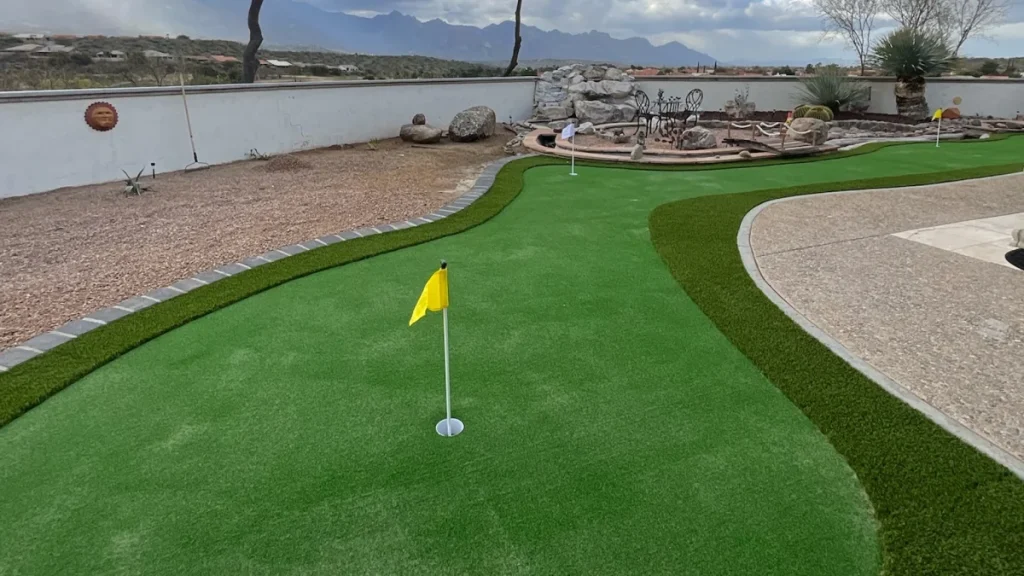
Got dogs? You’ll want pet turf with a very permeable backing and an antimicrobial or odor-control infill. For play areas, a shock pad under the turf makes landings softer. Putting greens are their own animal: short-pile specialty turf, careful contouring, cups. That’s why they cost more per foot than a regular lawn. Tell your installer about any of these up front so the quote reflects what you actually want.
6. Edging, borders and yard access
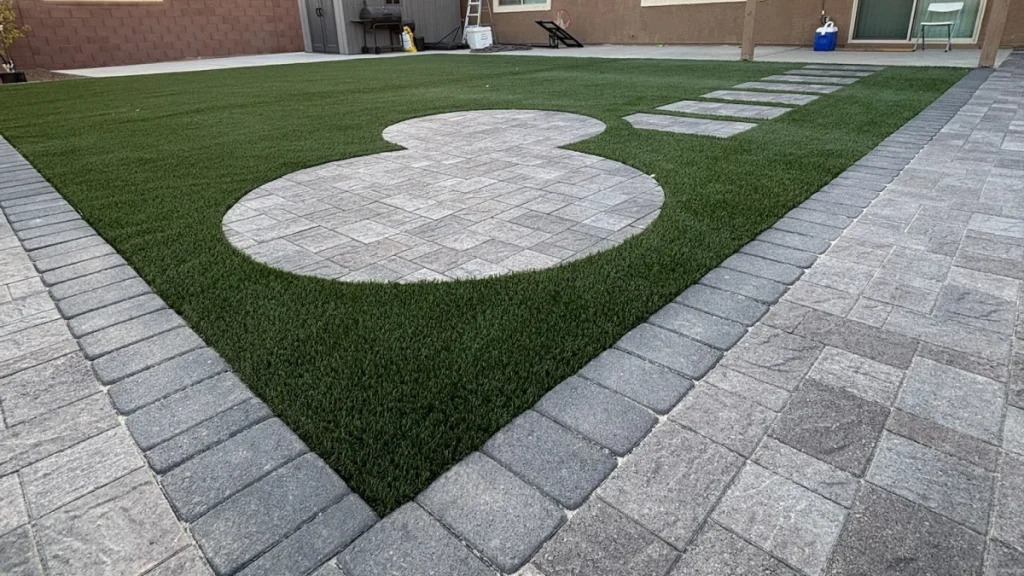
Good edges are what make turf look finished instead of dropped in. A lot of Tucson yards frame the turf with paver borders, curbing or decorative gravel. Access counts, too. If every load of rock has to squeeze through a narrow side gate, or the lot is on a hillside, labor goes up.
What a Quality Turf Installation Should Include
When you line quotes up side by side, check that each one covers the same work. A professional install in Tucson should include:
- Measuring the space and talking through turf options, layout and drainage
- Tearing out existing grass, rock or weeds and hauling the debris away
- Excavating and grading so water runs away from your house
- Weed barrier where it’s needed
- A crushed rock or decomposed granite base, laid and compacted
- Turf rolled out with the grain all running the same direction (skip this and the lawn looks patchy in certain light)
- Seams joined so you have to look hard to find them
- Edges secured with nails, staples or a border
- Infill brushed in and the blades groomed upright
One quote way under the others? Look at base depth, the turf product, and whether removal and haul-off are in there. That’s where the savings usually come from.
Artificial Turf vs. Natural Grass: Long-Term Cost
Turf costs more up front than seed or sod. No way around that. The difference shows up in the years after. A real lawn in Tucson wants water for most of the year, plus mowing, fertilizer, weed control, overseeding and the occasional busted sprinkler head. And you still get brown patches in summer and dormant Bermuda all winter.
Turf takes nearly all of that off your plate. No watering to keep it alive, no mowing, no fertilizer. Upkeep is a rinse now and then, brushing the high-traffic spots and picking up leaves. Over several years the water and lawn care you’re not paying for chip away at the install cost, and the yard stays green and usable twelve months a year.
It’s not the answer for every square foot, though. Turf in full, unshaded sun gets warm in summer, which is why we often pair it with trees or a pergola. If heat is on your mind, read our take on whether artificial turf gets too hot in Arizona.
Is There a Rebate for Artificial Turf in Tucson?
Everybody asks. Tucson Water does run a turf removal rebate, but it’s aimed at commercial, multifamily and HOA properties, and the City says plainly that replacement artificial grass isn’t rebated. We walk through who qualifies and what’s required in our post on Tucson’s grass removal rebate.
How to Save Money on Artificial Turf
- Put turf where you’ll actually use it. The strip along the side of the house nobody walks on? Gravel, pavers or desert plants do fine there for less.
- Pick the right product, not the priciest. For most family yards, a good mid-range residential turf is the sweet spot.
- Keep shapes simple. Layouts that work with standard roll widths mean less waste and fewer seams.
- Bundle the work. Doing turf, pavers and borders as one project saves on repeat setup and prep.
- Don’t cheap out on the base. We’d rather talk you into a smaller lawn than a thinner base. Redoing a failed install costs far more than doing the prep right the first time.
Hidden Costs to Watch For
A low per-foot price on the first page doesn’t always mean a low final bill. Before you sign anything, ask whether any of these could get tacked on later:
- Irrigation changes: capping or rerouting the old sprinkler lines so they don’t leak under your new turf.
- Tree and plant protection: working around big roots, or moving plants that sit inside the turf area.
- Extra base material to fill deep low spots or fix steep grades.
- Disposal fees for hauling off a lot of soil, sod or rock.
- Upgraded infill: pet or cooling infills cost more than plain sand.
An itemized quote puts all of this on paper before anyone picks up a shovel. It also makes it easy to adjust. If the total is higher than you hoped, trimming the turf area a bit is often the simplest fix.
How to Compare Artificial Turf Quotes
- Which turf product is going in, and what manufacturer warranty comes with it?
- How deep do they dig, and what goes into the base?
- What’s the plan for drainage along the house and in low spots?
- Are removal, haul-off, weed barrier, edging and infill all included, or extras?
- Get it itemized. Otherwise you’re comparing a total to a total and learning nothing.
Get an Accurate Artificial Turf Price for Your Tucson Yard
No two yards are the same, so the only way to pin down your artificial turf cost in Tucson is to have someone come out and look. The estimate is free. Oakswood Turf & Hardscape installs artificial grass across Tucson, Marana, Vail, Sahuarita, Catalina Foothills and Tanque Verde. Request your free quote or call +1 (520) 622-9960. We’ll measure the space, show you a few turf options and hand you a clear, itemized price.